Safety Standard Battery-Based Hot-Swap System (AMR / Walking Robots)
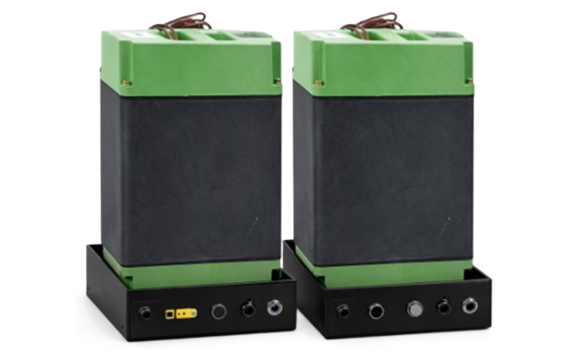
Develop and deploy a hot-swap system based on a safety standard battery to minimize downtime caused by battery charging, ensuring safety and scalability.
Establishment and Validation of a Hot-Swap Autonomous Mobile Robot Demonstration Environment
1. Ensure compatibility and scalability based on a safety standard battery in compliance with KS R 6100.
2. Maintain continuous power supply to the target system through sequential battery attachment and detachment.
Safety Standard Battery-Based Hot-Swap Module Configuration
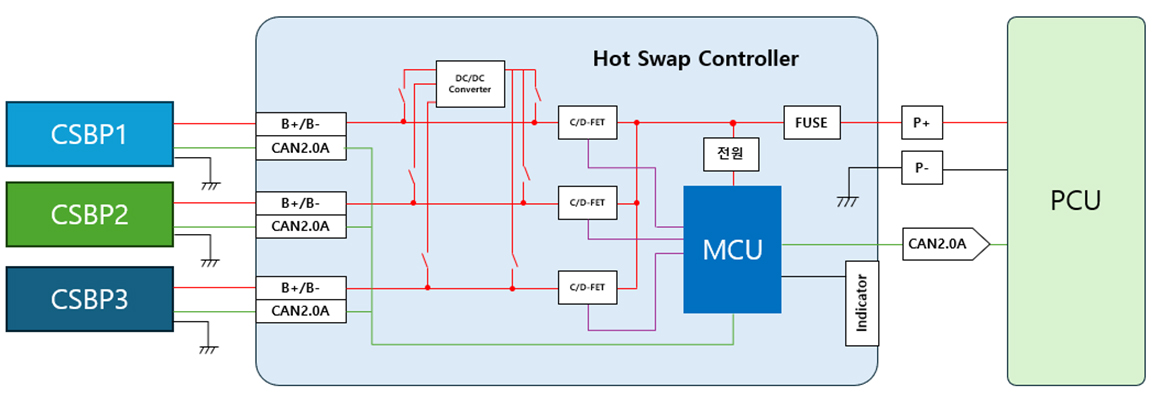
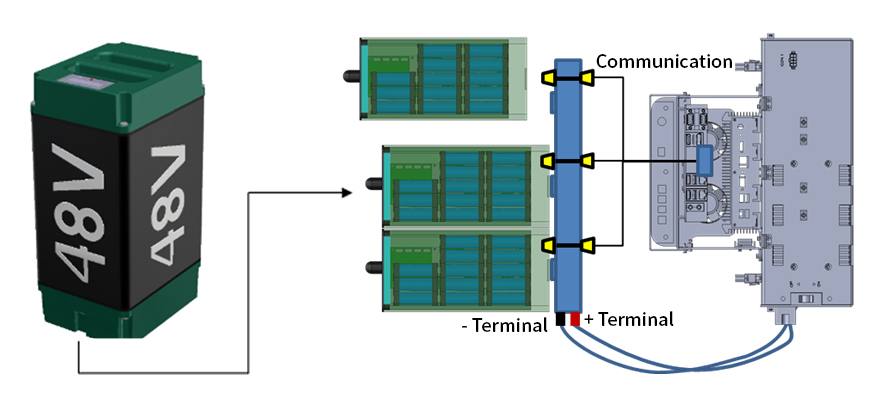
Hot-Swap System Block Diagram
1. Limit inrush current through pre-charge control during battery replacement → prevents temperature rise and overcurrent caused by voltage imbalance.
2. Develop the hot-swap module → enables battery replacement within 2 minutes, improves compatibility, and ensures replacement safety.
Item
Requirements
Discharge Voltage Range
39.2V ~ 58.8V
Maximum Discharge Current
20A
Charge Voltage
58V
Maximum Charge Current
20A (Single Module) / 50A (Three Modules)
Parallel Module Configuration
3 Modules in Parallel
Output Control
MOSFET
Inrush Current Protection
Pre-charge Circuit or DC/DC Converter
Swapping Status Indicator
LED Status Indicator (Module 1–3 / Power / Fault)
Monitoring Software
Bluetooth Mobile Monitoring and Data Logging
Enclosure
Steel with Black Powder Coating (Black)
Compatible Size Range
Within 425 × 178 × 170 mm
Communication Port
U-CAN
Input / Output Connector
Terminal Block with Cover (Ring Terminal Fixing Type)
IP Protection Rating
IPx4
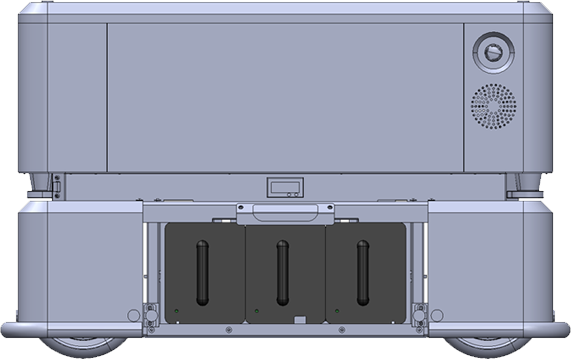
Mobile Base
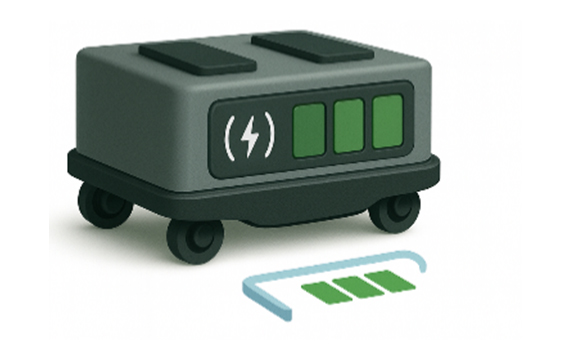
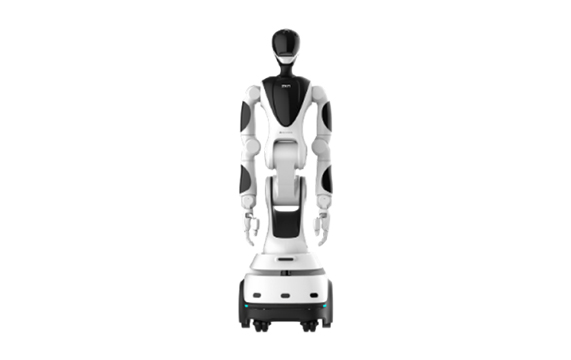
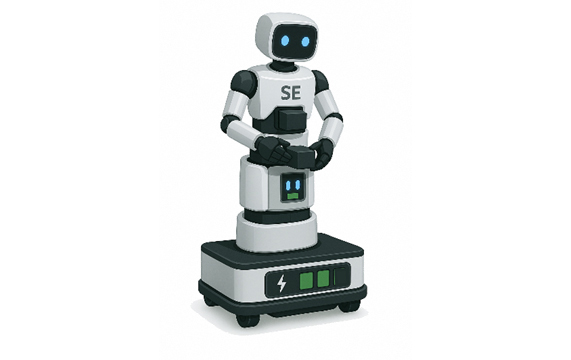
Hot-Swap Battery Module Demonstration (AMR)
1. Demonstration conducted using the in-house battery testing facility.
2. Implementation of thermal runaway prevention and hot-swap technology based on customer requirements (application of safety standard battery).
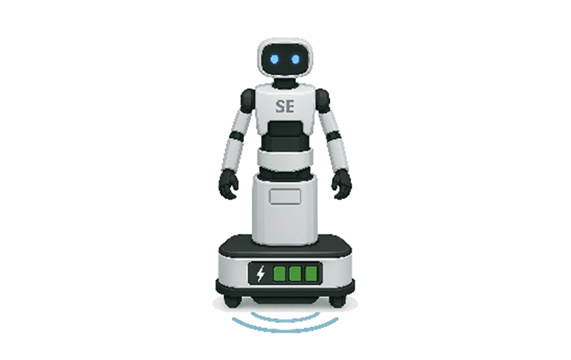
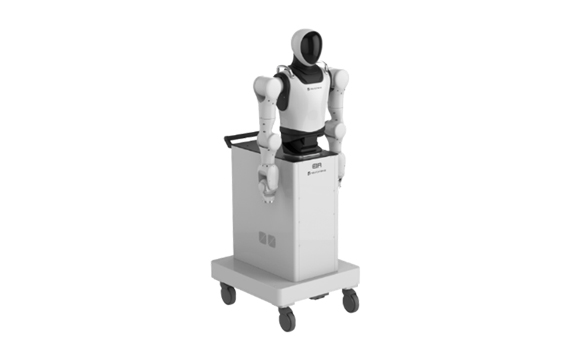
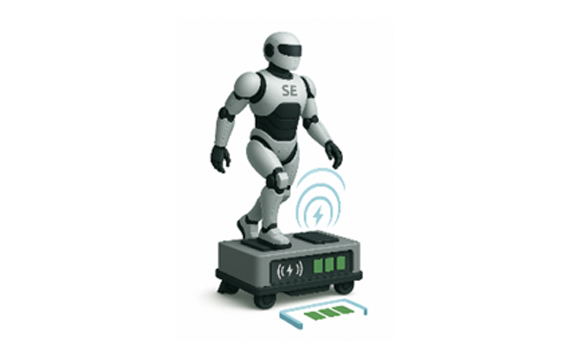
Application of Hot-Swap Battery Module for Humanoid Robots
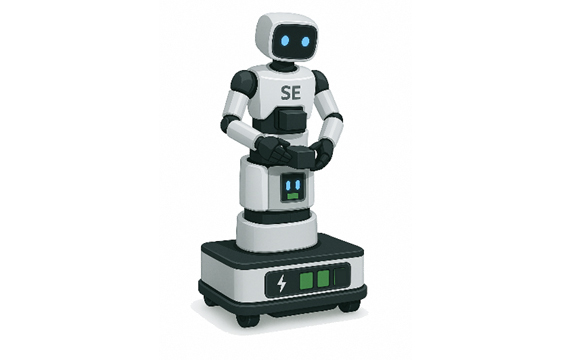
1. Wireless charging during movement when the humanoid robot is mounted on a mobile base.
2. Self battery replacement of the humanoid robot (integrated robot) using the battery installed inside the mobile base.
Advancement of Hot Swap System Technology (for Logistics and Humanoid Robots)
Securing scalable technology for application across diverse robot platforms through advancement of hot swap systems
Standardization and Advancement of Hot Swap Systems
1. Establishment of standardized technology enabling application across various fields by utilizing a hot swap system based on standardized battery packs and detachable structures
2. Advancement of technology through the development of vertically stacked cradle structures and 1–4 parallel hot swap controllers, considering humanoid tower configurations for AMR applications
Separated Tower Type: Applied to logistics robots and service robots
Vertical Stacked Type: Applied to humanoid robots (e.g., Neuromeka AIRE)
System Requirements
1. Hot swap controller supporting 1 to 4 parallel battery packs (applicable to AMR RP / humanoid / logistics robots)
2. Application of pre-charge circuits and inrush current limiting circuits between battery modules
3. Data communication via CAN 2.0 and output control through FET control for module packs
4. Power supply (discharge) and charging for vehicles (AMR) configured through a single power line